Oct 17, 2026 · Victor Slompo
AI writing code isn’t the bottleneck. Review is.
When agents produce more, review becomes the critical point.



The images are the original Instagram carousel, in Portuguese.
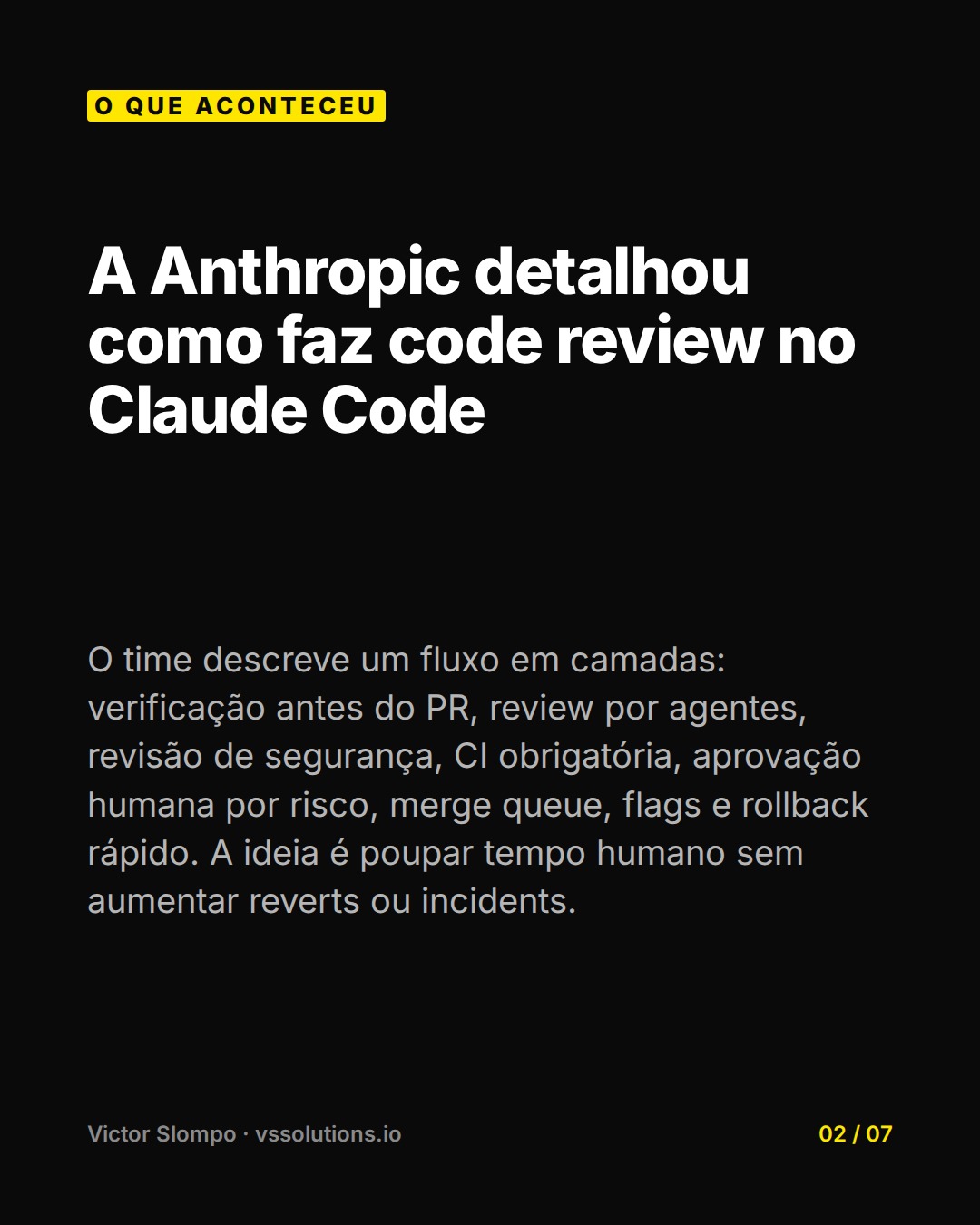
WHAT HAPPENED
Anthropic explained how it does code review in Claude Code
The team describes a layered flow: checks before the PR, review by agents, security review, mandatory CI, human approval based on risk, merge queue, flags, and fast rollback. The idea is to save human time without increasing reverts or incidents.
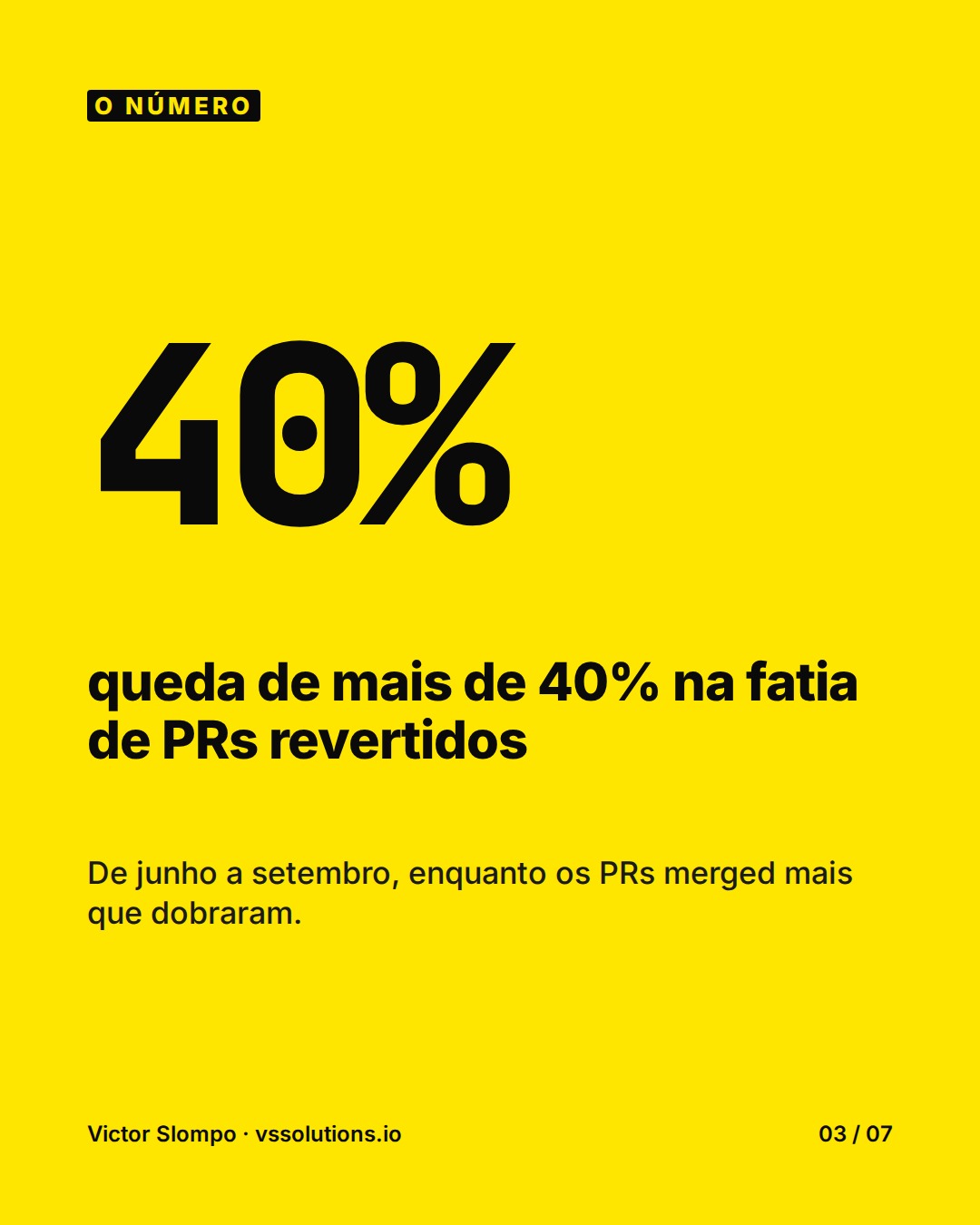
THE NUMBER
40%
more than a 40% drop in the share of reverted PRs
From June to September, while merged PRs more than doubled.
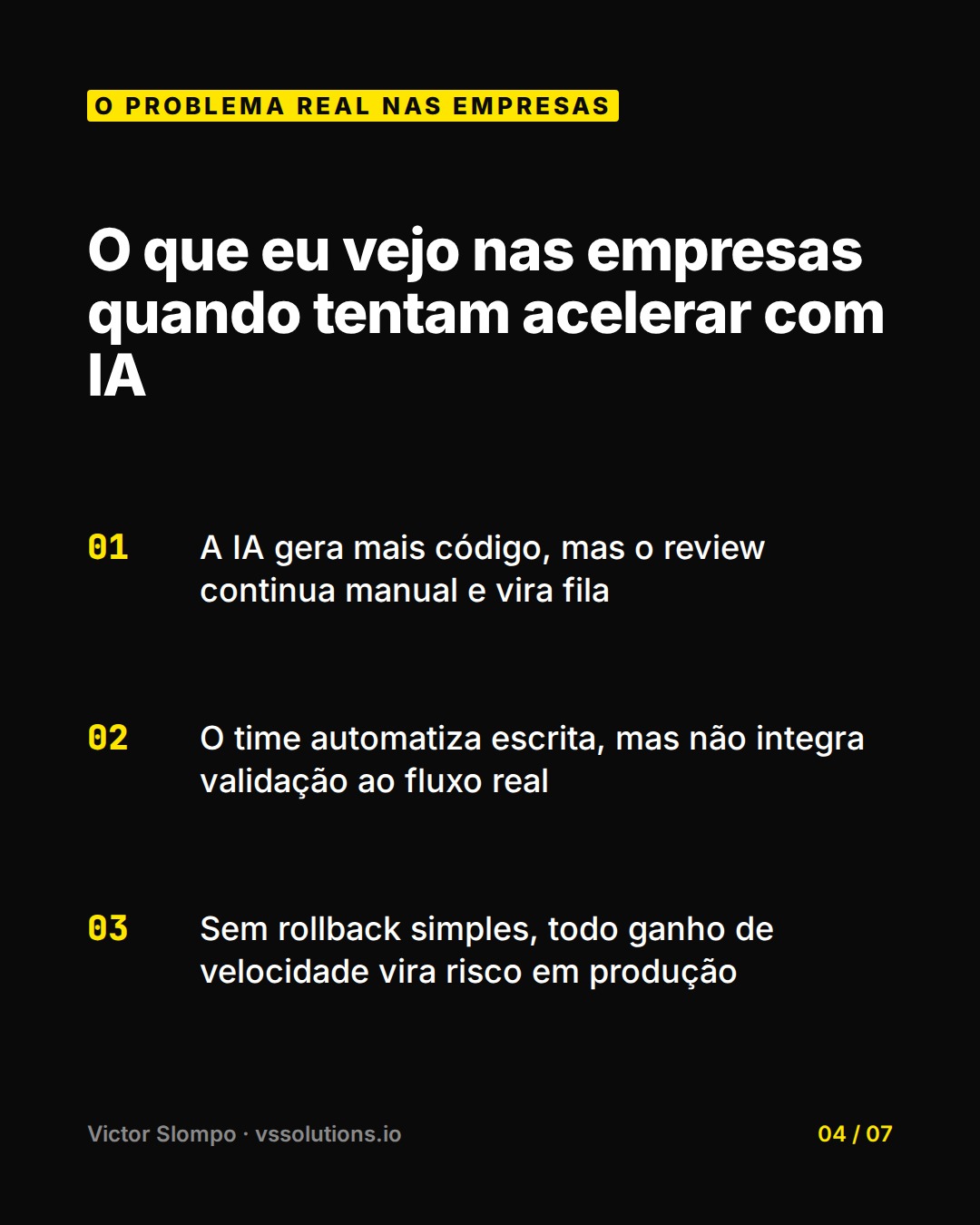
THE REAL PROBLEM IN COMPANIES
What I see in companies when they try to speed up with AI
- 01AI generates more code, but review stays manual and turns into a queue
- 02The team automates writing, but doesn’t integrate validation into the real workflow
- 03Without simple rollback, every speed gain turns into production risk
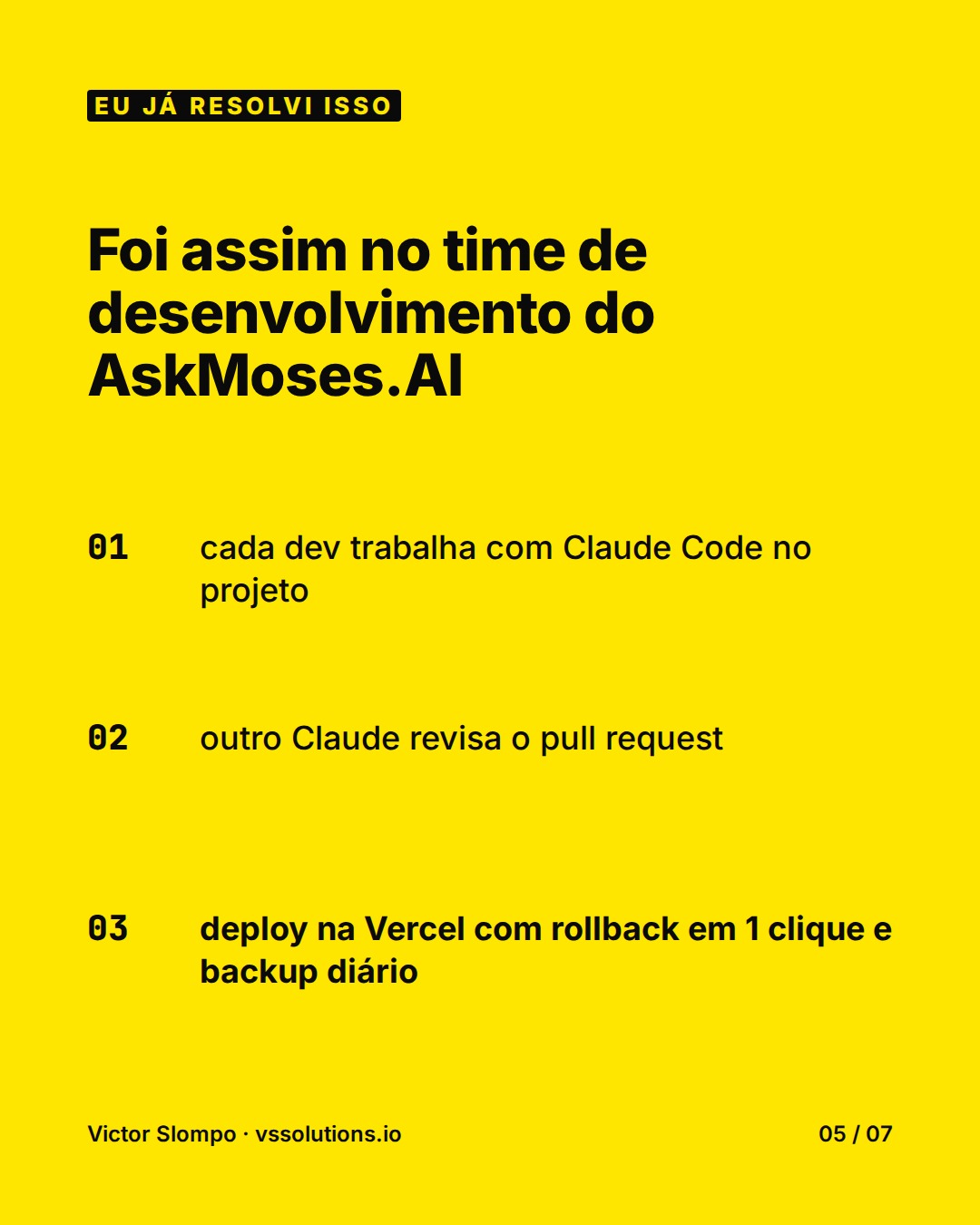
I’VE ALREADY SOLVED THIS
This is how we did it on the AskMoses.AI development team
- 01each dev works with Claude Code on the project
- 02another Claude reviews the pull request
- 03deploy on Vercel with 1-click rollback and daily backup
MY TAKE
Measure instead of assuming.
If AI speeds up writing but increases rework, incidents, or approval wait time, there was no real gain. In this case, the point isn’t how many agents write code. It’s how much of the flow becomes reliable, auditable, and reversible in production.
Sources
Want this working in your company?
I take AI off the slide deck and put it into production, with measured results. On Instagram, comment CLAUDE on the post and I'll send you the step-by-step by DM.