Oct 20, 2026 · Victor Slompo
Without context and traceability, a coding agent becomes a bottleneck
The gain does not come only from the model. It comes from the operation behind it.


The images are the original Instagram carousel, in Portuguese.
WHAT HAPPENED
They created a Git built for AI agents
The git-ai repository describes itself as “Git designed for AI agents”. The idea is to replace the classic flow, built for humans, with a server-centric layer for many agents reading, writing, and delivering code at the same time.
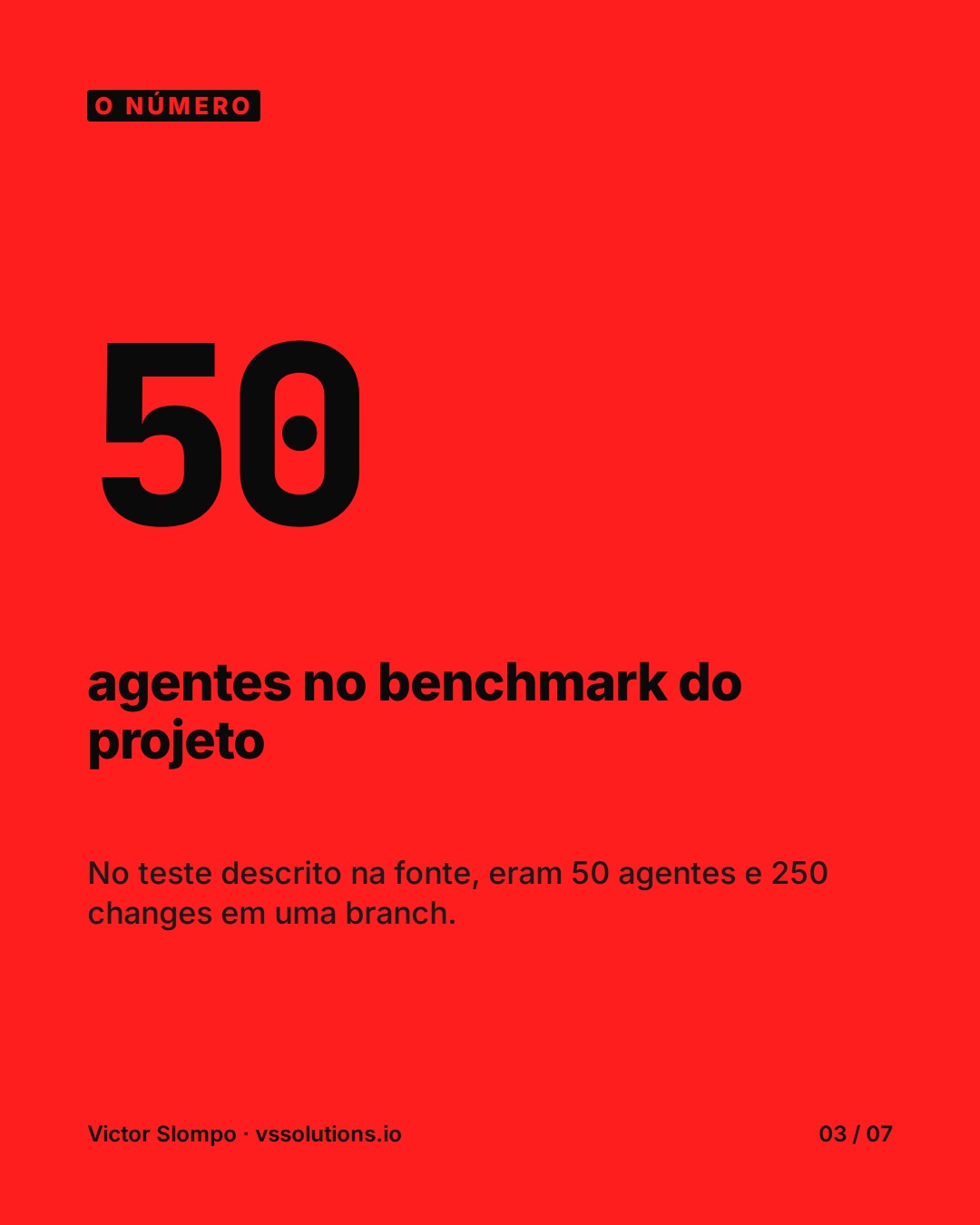
THE NUMBER
50
agents in the project's benchmark
In the test described in the source, there were 50 agents and 250 changes in one branch.
THE REAL PROBLEM IN COMPANIES
What I see in companies when agents enter the codebase
- 01Each agent produces something, but without shared context the handoff breaks
- 02Review becomes loose, with no clear trail of who changed what and why
- 03The human becomes AI tech support instead of making business decisions
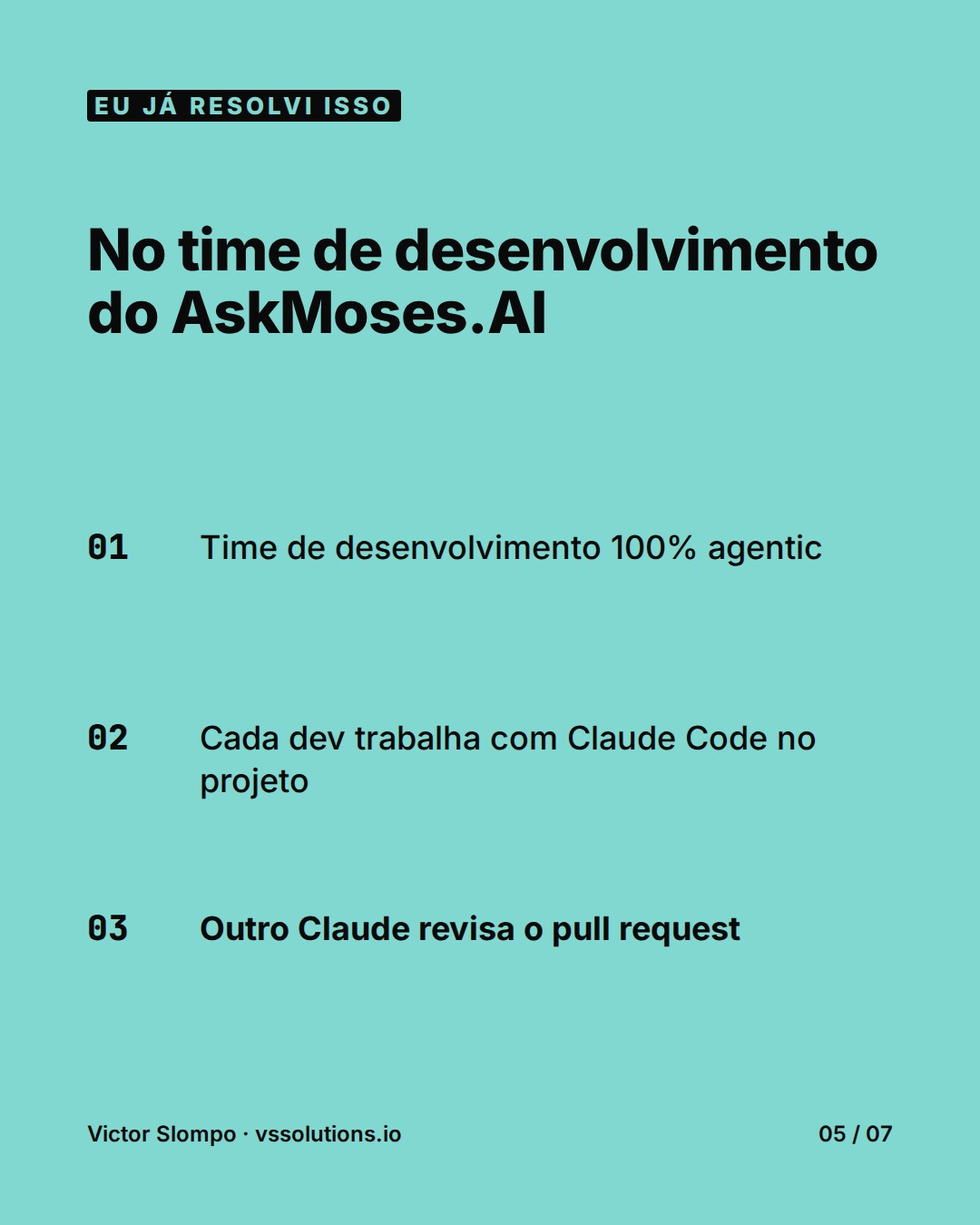
I HAVE ALREADY SOLVED THIS
In the AskMoses.AI development team
- 01100% agentic development team
- 02Each dev works with Claude Code on the project
- 03Another Claude reviews the pull request
MY TAKE
Simple that works is worth more than complex that impresses.
In practice, a coding agent without an operations layer only increases the volume of change. What sustains production is context, review, handoff, and rollback. If that is clear, AI helps. If not, it only speeds up the chaos.
Sources
Want this working in your company?
I take AI off the slide deck and put it into production, with measured results. On Instagram, comment CLAUDE on the post and I'll send you the step-by-step by DM.