Oct 20, 2026 · Victor Slompo
Accurate forecasts are useless if operations don't use them
A time series model only creates value when it becomes part of the process


The images are the original Instagram carousel, in Portuguese.
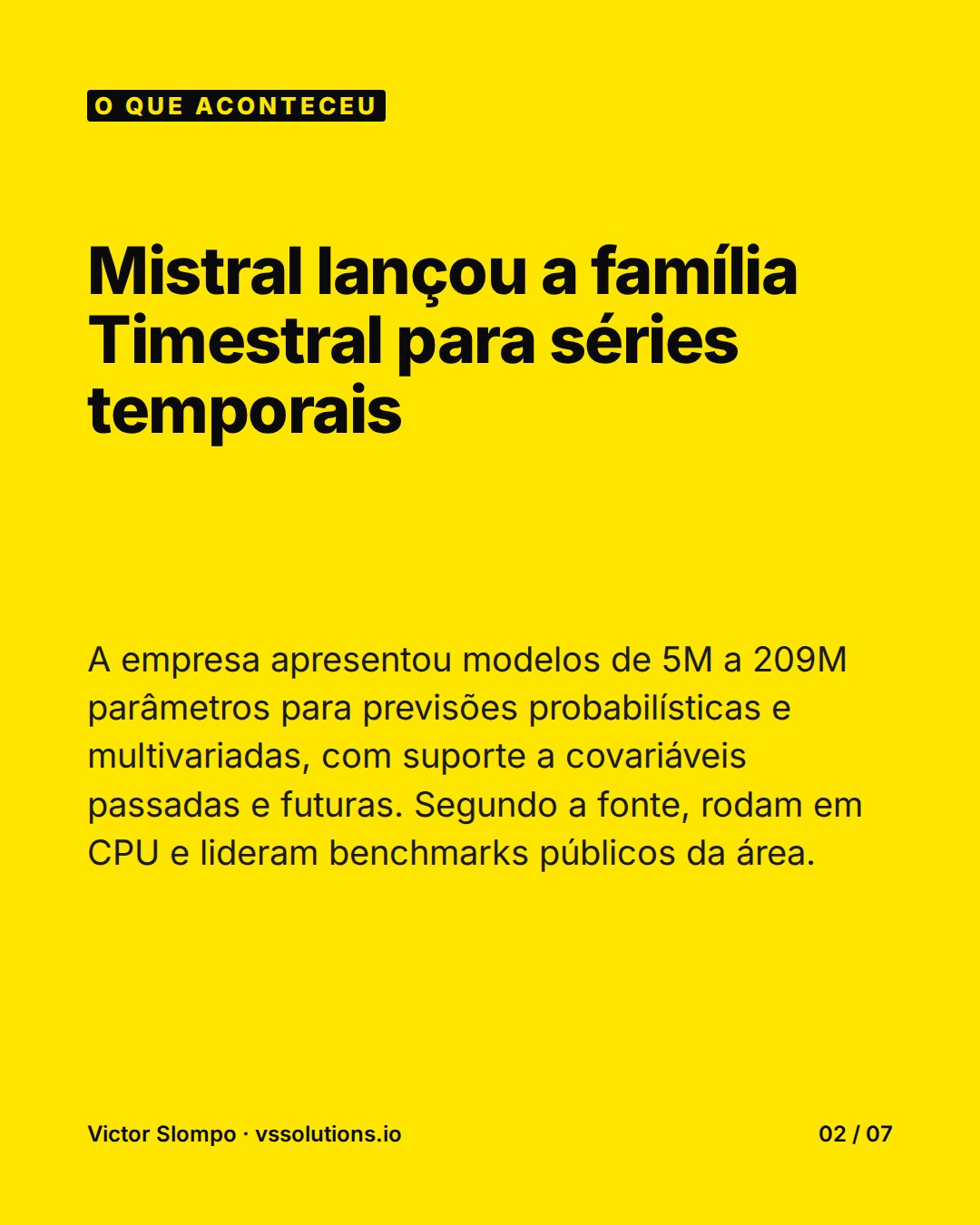
WHAT HAPPENED
Mistral launched the Timestral family for time series
The company introduced models from 5M to 209M parameters for probabilistic and multivariate forecasting, with support for past and future covariates. According to the source, they run on CPU and lead public benchmarks in the field.
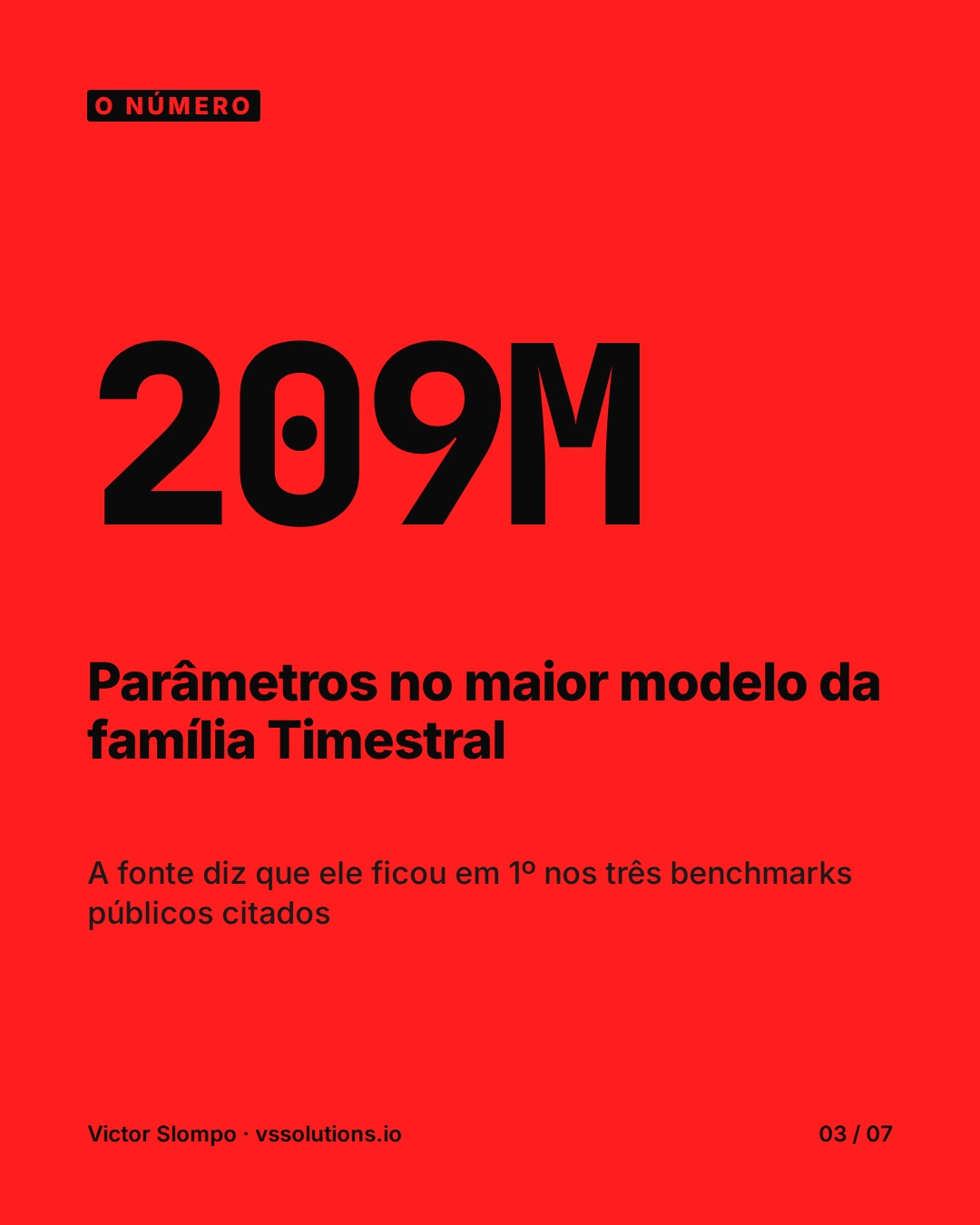
THE NUMBER
209M
Parameters in the largest model of the Timestral family
The source says it ranked 1st in the three public benchmarks mentioned
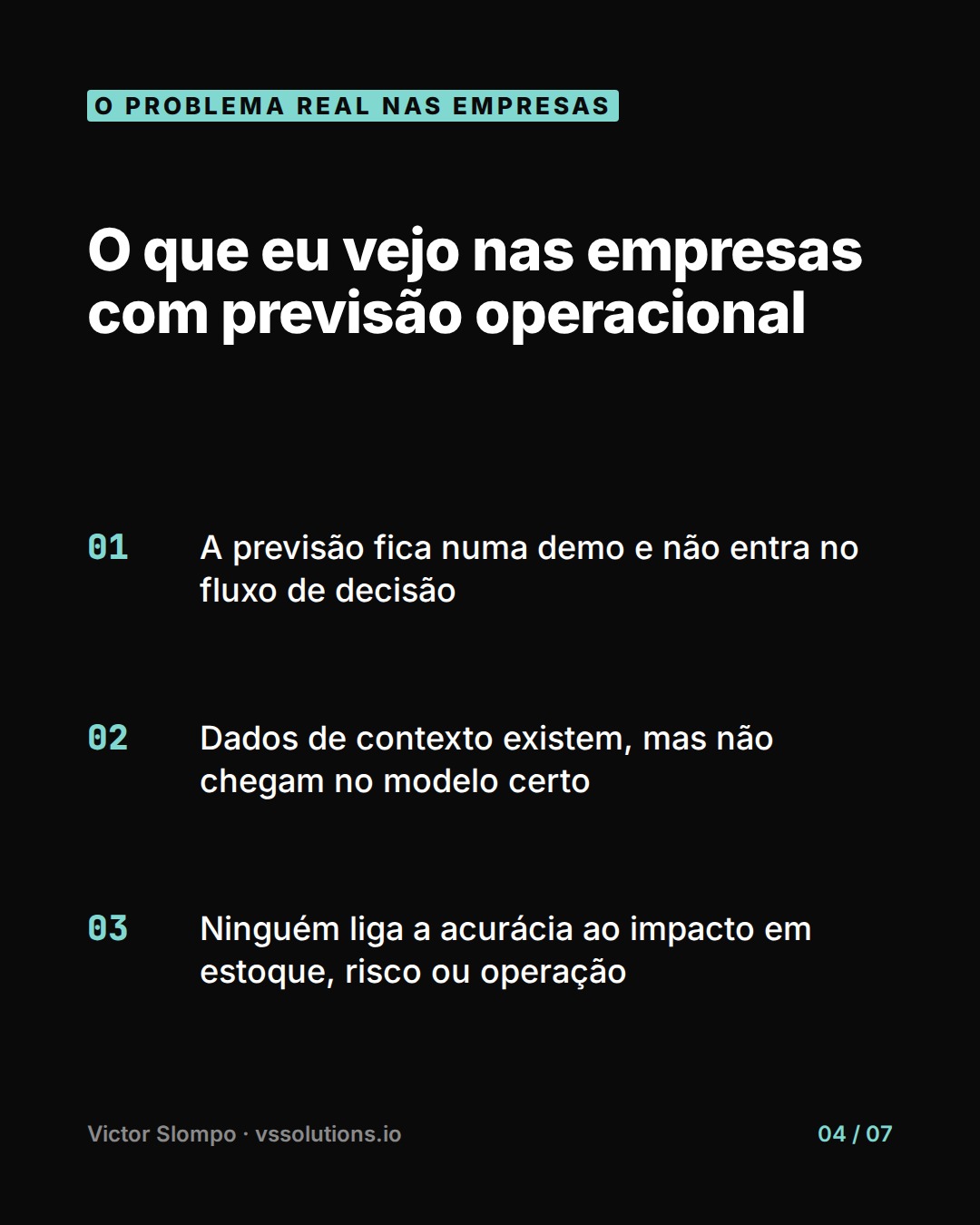
THE REAL PROBLEM IN COMPANIES
What I see in companies doing operational forecasting
- 01Forecasting stays in a demo and never enters the decision flow
- 02Context data exists, but it doesn't reach the right model
- 03No one connects accuracy to impact on inventory, risk, or operations
WHERE THIS BREAKS IN PRACTICE
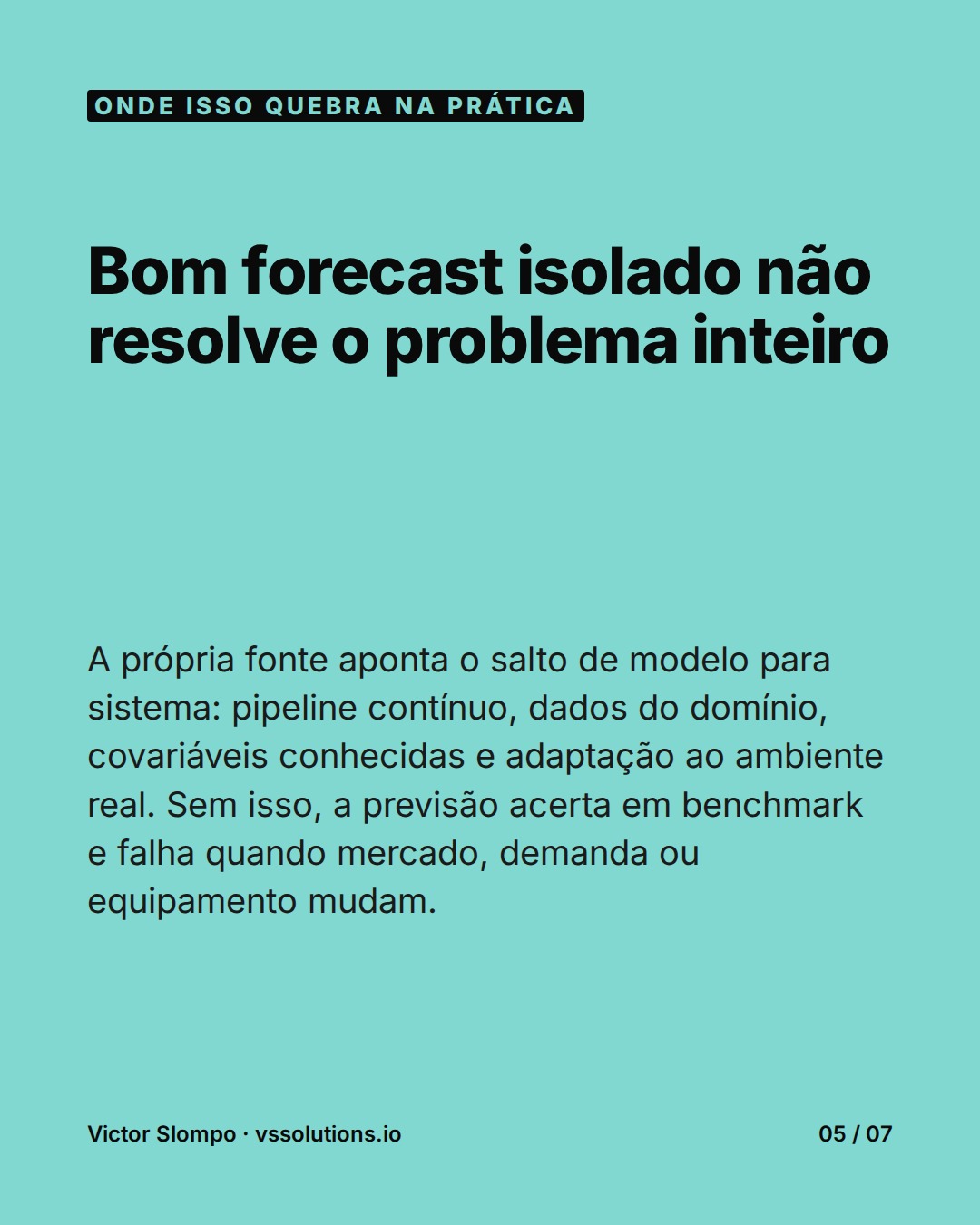
A good forecast on its own doesn't solve the whole problem
The source itself points to the shift from model to system: continuous pipeline, domain data, known covariates, and adaptation to the real environment. Without that, the forecast performs well on benchmarks and fails when the market, demand, or equipment changes.
MY TAKE
Measure instead of assume.
Time series matters because it affects demand, capacity, risk, and maintenance. But I only consider it valuable when the forecast enters the process and has a business metric being tracked alongside it. Launching a model without measuring the decision made is just an expensive experiment.
Sources
Want this working in your company?
I take AI off the slide deck and put it into production, with measured results. On Instagram, comment PROJETO on the post and I'll send you the step-by-step by DM.