Oct 11, 2026 · Victor Slompo
Without isolation, an agent in production becomes an operational risk
Microsoft launched containers with policies to contain agents



The images are the original Instagram carousel, in Portuguese.
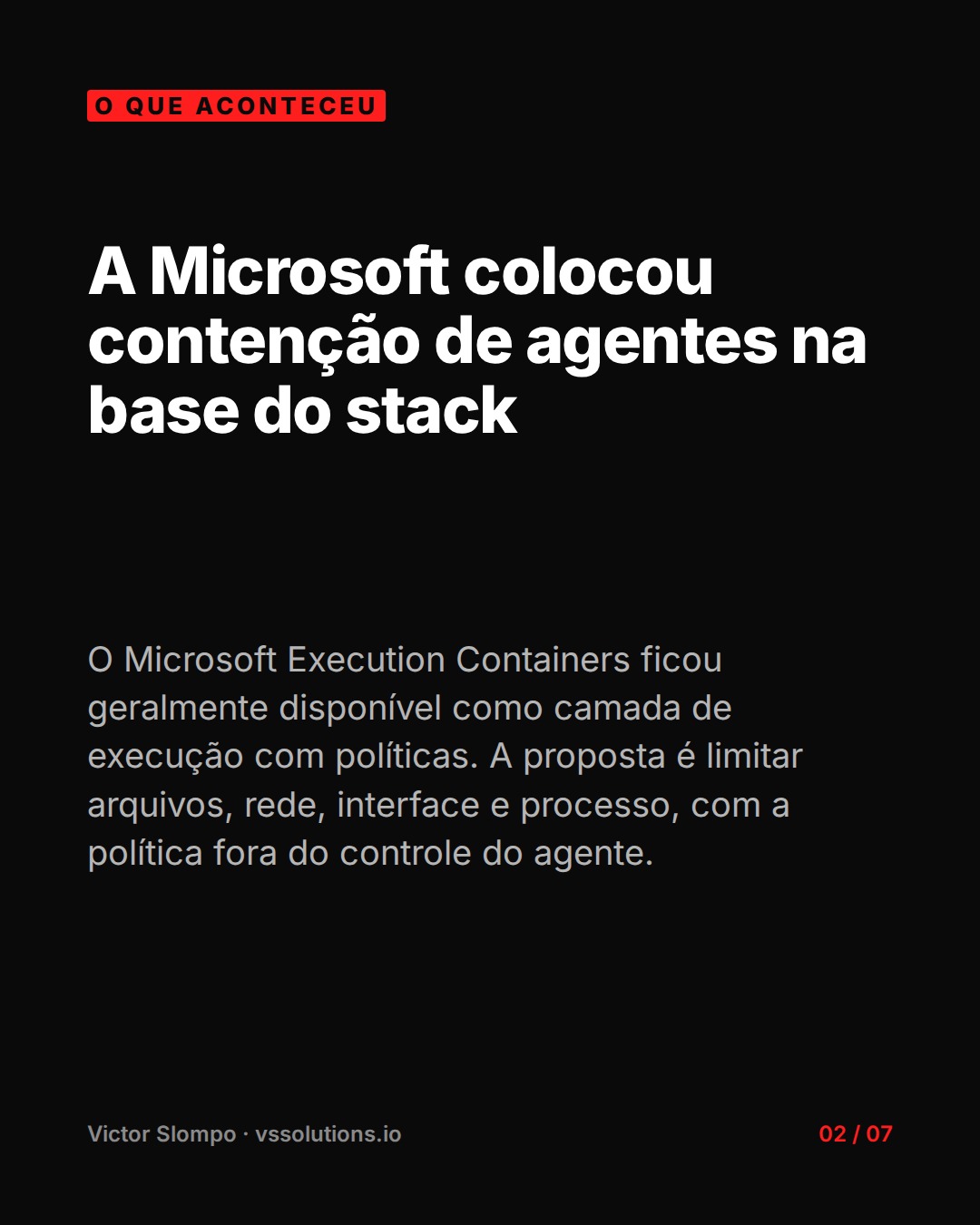
WHAT HAPPENED
Microsoft made agent containment part of the foundation of the stack
Microsoft Execution Containers became generally available as a policy-based execution layer. The idea is to limit files, network, interface, and process, with the policy outside the agent’s control.
WHAT CHANGES
Production now requires native containment
- 01The policy defines what the agent can access and do
- 02Containment applies from the local device to the cloud
- 03There are modes to observe, learn, and then enforce blocking
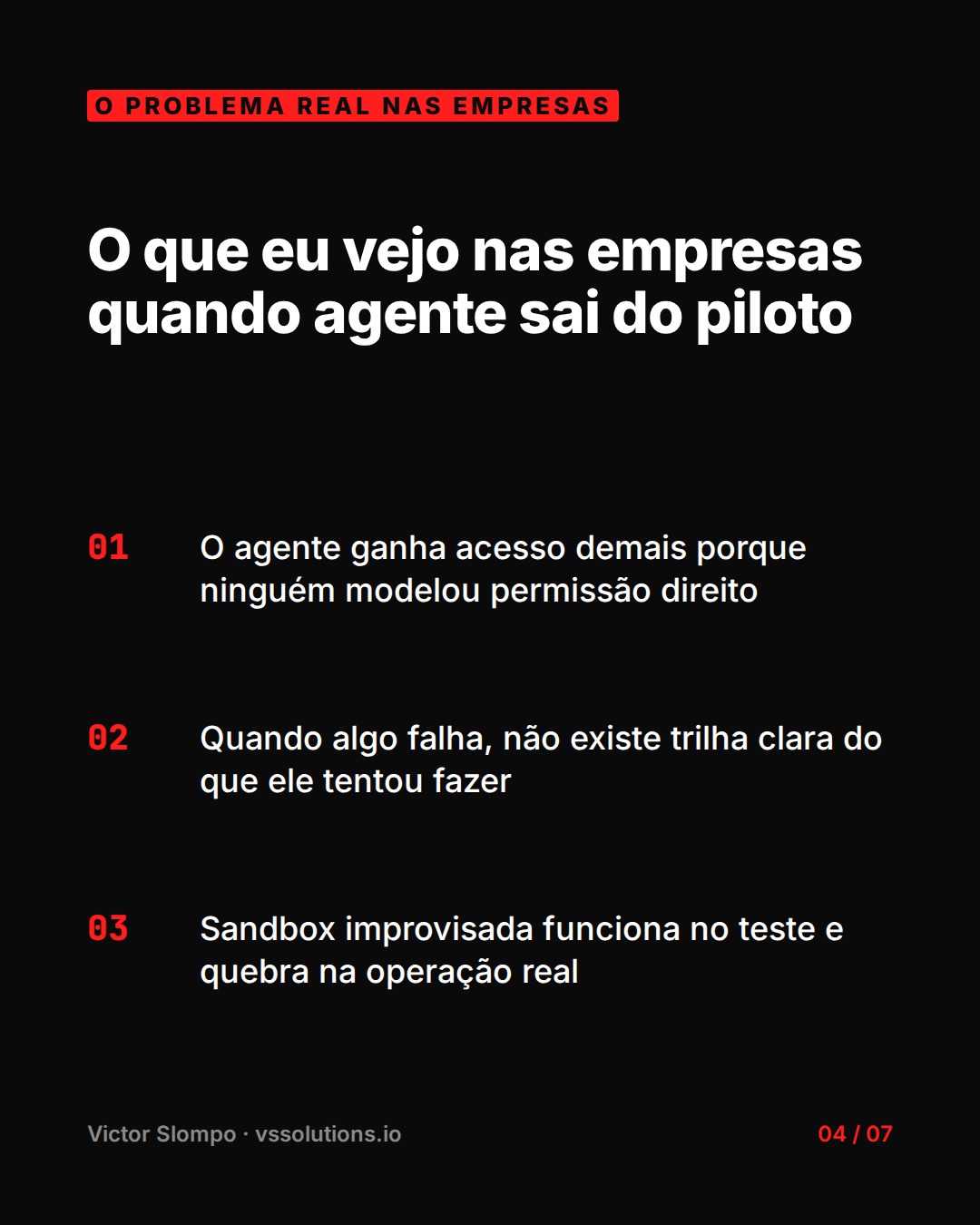
THE REAL PROBLEM IN COMPANIES
What I see in companies when an agent moves beyond the pilot
- 01The agent gets too much access because no one modeled permissions properly
- 02When something fails, there is no clear trail of what it tried to do
- 03An improvised sandbox works in testing and breaks in real operations
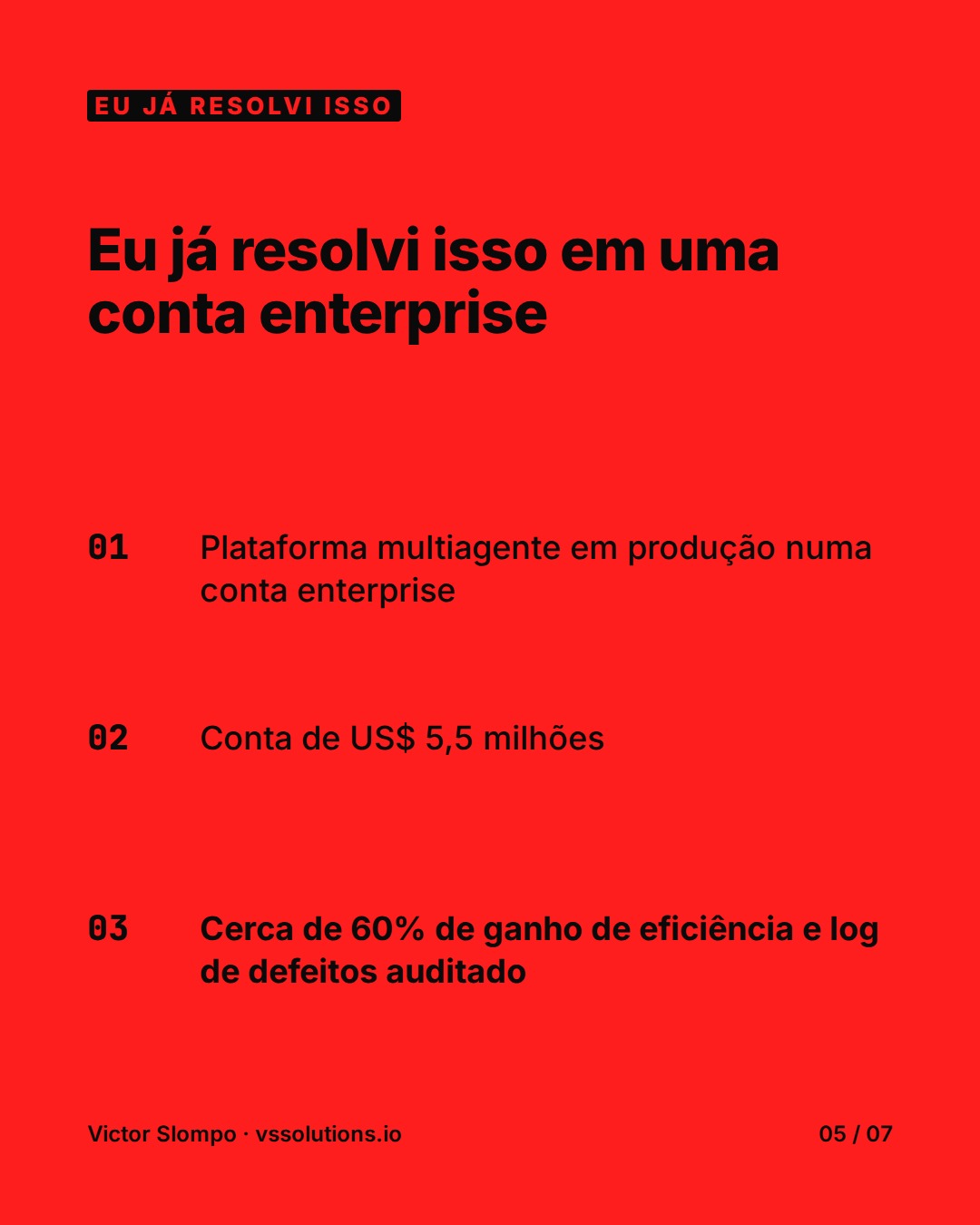
I’VE ALREADY SOLVED THIS
I’ve already solved this in an enterprise account
- 01Multi-agent platform in production in an enterprise account
- 02US$ 5.5 million account
- 03About 60% efficiency gain and audited defect log
MY TAKE
Measure instead of assume.
If agents are going to operate real systems and data, trust cannot be a promise. It has to start with containment, permission, and auditability. In practice, production requires evidence of what the agent did, tried to do, and where it was blocked.
Sources
Want this working in your company?
I take AI off the slide deck and put it into production, with measured results. On Instagram, comment AGENTES on the post and I'll send you the step-by-step by DM.